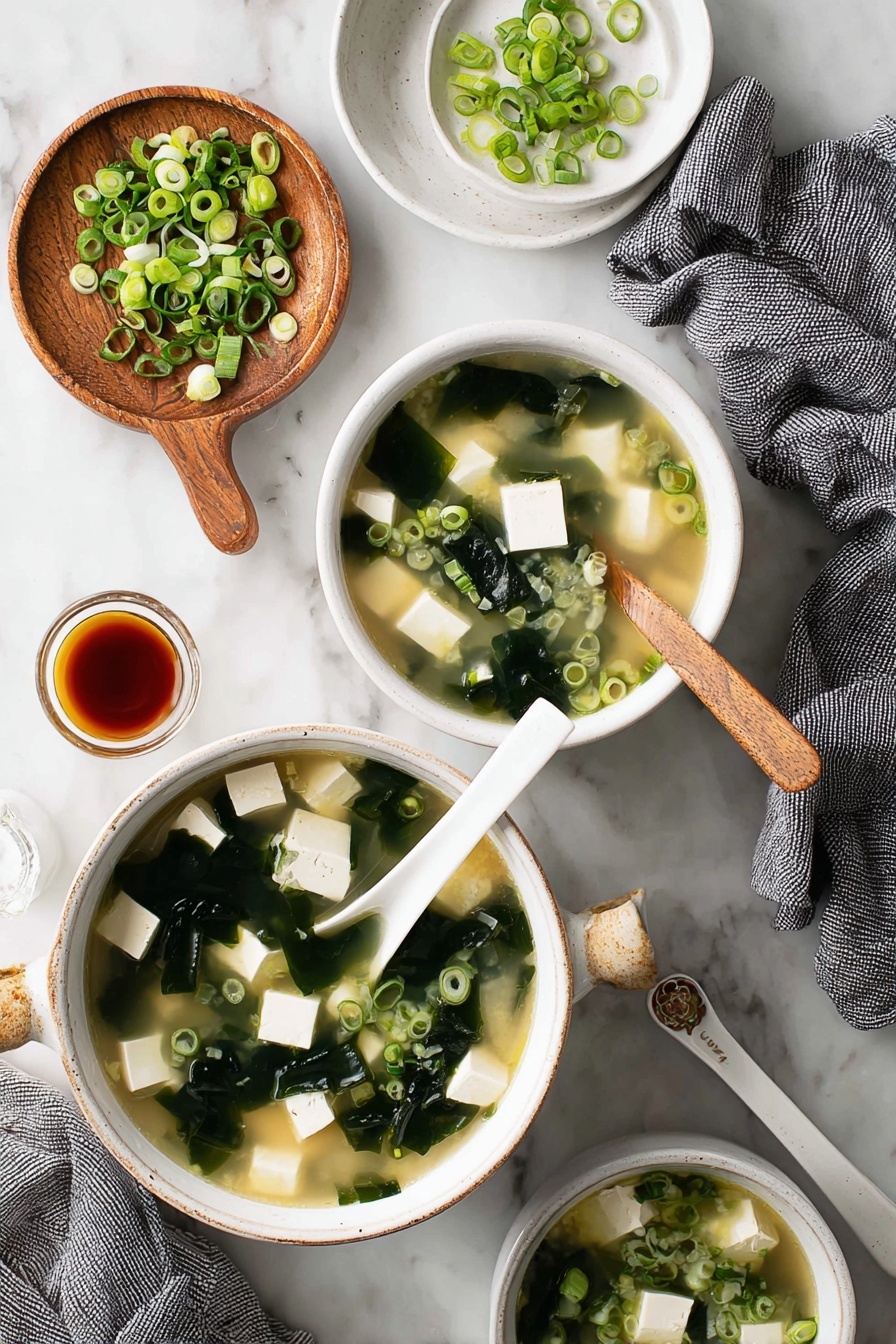
If you’re looking for a cozy, comforting bowl of goodness that’s super quick and nourishing, then you’ve hit the jackpot with this Easy Miso Soup with Tofu and Seaweed Recipe. I absolutely love how this turns out because it’s light but packed with umami flavor, and it comes together in just about 20 minutes. Whether you’re new to Japanese cooking or just want a simple, healthy soup without fuss, this recipe will feel like a warm hug on a chilly day. Keep reading and I’ll share all my tips to help you make this comforting classic perfectly every time!
Why You’ll Love This Recipe
- Quick and Easy: You’ll have a flavorful soup ready in 20 minutes or less—perfect for busy weeknights.
- Healthy Ingredients: With silken tofu, seaweed, and miso paste, it’s a nourishing boost packed with protein and minerals.
- Authentic Taste: This soup delivers that classic umami you want from homemade miso soup without complicated steps.
- Customizable: Easy to adjust with your favorite veggies or seasoning tweaks to suit your family’s taste.

Ingredients You’ll Need
The magic behind this Easy Miso Soup with Tofu and Seaweed Recipe lies in simple ingredients that work so well together. I always recommend searching for good quality kombu and wakame – these seaweeds bring out the savory depth and bright ocean notes that make this soup special.

- Kombu: This dried kelp adds a rich umami flavor when gently simmered; don’t skip it or your broth will miss that signature depth.
- Dried Wakame Seaweed: Easy to store and rehydrates quickly, it brings texture and subtle brininess to the soup.
- White Miso Paste: Choose a smooth, mild white miso for a sweet, gentle flavor that balances the broth perfectly.
- Silken Tofu: Its soft, creamy texture contrasts beautifully with the seaweed and broth—be gentle when handling it.
- Green Onion: Adds a fresh, bright note as a finishing touch.
- Tamari: Use this gluten-free soy sauce alternative to season to taste and deepen the savory notes.
- Water: The base of your broth where the kombu infuses its flavor.
Variations
I like to mix things up a bit with this Easy Miso Soup with Tofu and Seaweed Recipe. It’s great because you can tweak it to your mood or what’s in season, and it always stays comforting and delicious. Don’t hesitate to experiment – it’s your soup to enjoy!
- Add Mushrooms: I love throwing in some shiitake or enoki for an earthier flavor and extra texture.
- Use Different Tofu: If silken isn’t your thing, feel free to try firm tofu cubes for a chewier bite.
- Spice it Up: Adding a dash of chili oil or sliced fresh ginger gives the broth a warming kick I discovered during a cold winter.
- Vegetable Boost: Toss in some baby spinach or sliced carrots for a colorful, nutrient-packed twist.
How to Make Easy Miso Soup with Tofu and Seaweed Recipe
Step 1: Gently Simmer Kombu to Build Your Broth
Start by giving your kombu a quick rinse—you want to remove any surface dust without washing away its natural flavor. Place that piece in 4 cups of water and heat it gently on the stove. Now, here’s the trick I learned: never let the water boil! Keep it just under a simmer for about 10 minutes. Boiling makes the kombu bitter, and trust me, you don’t want that to ruin your soup’s beautiful taste.
Step 2: Rehydrate Your Wakame Seaweed
While the kombu simmers, pop your dried wakame into a small bowl with warm water. Let it soak for at least 5 minutes until it softens and plumps up. This step is quick and simple but really brings that lovely seaweed texture we all crave.
Step 3: Mix Miso into the Broth Carefully
Remove your kombu from the pot—it’s done its job. In a small bowl, scoop out your white miso paste and stir in a ladleful of the hot kombu broth until smooth. This step prevents clumping when adding miso to hot liquid, a trick I stumbled upon after some frustrating lumps in earlier attempts. When it’s silky and blended, pour the miso mixture back into the pot.
Step 4: Add Seaweed, Tofu, and Green Onion
Drain your wakame and add it to the pot along with the silken tofu cubes and chopped green onion. Let everything warm over very low heat for 1 to 2 minutes—don’t boil! A simmer is all you need to let flavors meld while keeping tofu tender and smooth.
Step 5: Season and Serve
Finally, season your soup with tamari to taste. I usually start with a teaspoon and add more if needed. Taste as you go—since miso paste can vary in saltiness—and serve immediately. The contrast of warm broth, fresh green onion, soft tofu, and seaweed is simply gorgeous.
Pro Tips for Making Easy Miso Soup with Tofu and Seaweed Recipe
- Gentle Heat Only: Never boil the soup after adding miso paste; it destroys the probiotics and alters the delicate flavor.
- Use Silken Tofu Carefully: Handle gently with a slotted spoon or spoon it in last to avoid breaking apart your tofu cubes.
- Adjust Seasoning Last: Because miso varies, add tamari slowly and taste so you don’t over-salt your soup.
- Rehydrate Seaweed Properly: Soak wakame just until soft—not too long—to keep its best texture and flavor.
How to Serve Easy Miso Soup with Tofu and Seaweed Recipe

Garnishes
I usually top my miso soup with tiny slivers of fresh green onion or thinly sliced scallions—they really brighten every spoonful. Sometimes I sprinkle toasted sesame seeds for a nutty crunch or a pinch of shichimi togarashi if I want a little heat. These small touches make a big difference, trust me!
Side Dishes
My family goes crazy for pairing this soup with steamed rice and pickled vegetables like kimchi or tsukemono. If I’m feeling fancy, I add a little grilled fish or edamame for protein. It’s such a balanced, simple meal that feels thoughtfully put together without much effort.
Creative Ways to Present
For dinner parties, I like to serve this miso soup in small, rustic bowls alongside little trays of extra toppings like thinly sliced mushrooms, fresh herbs, and chili oil. It turns an everyday soup into a personalized experience everyone loves. I even bring out wooden spoons for that authentic Japanese vibe!
Make Ahead and Storage
Storing Leftovers
I store any leftover soup in an airtight container in the fridge for up to 2 days. Just be careful—the tofu softens more each day, so it’s best eaten fresh. I usually leave out the green onions if I plan to store it and add fresh ones when reheating.
Freezing
From my experience, I don’t recommend freezing this soup. The delicate tofu and seaweed texture don’t hold up well to freezing and thawing; it can make the tofu grainy and the broth cloudy. It’s definitely best fresh or refrigerated.
Reheating
I reheat my miso soup gently over low heat on the stove, stirring carefully until warmed through—never boiling. This keeps the tofu intact and preserves the miso’s fresh flavor. I usually add a splash of water or broth if it’s thickened too much in the fridge.
FAQs
-
Can I use instant dashi instead of kombu?
Absolutely! If you don’t have kombu on hand, instant dashi powder or granules can be a convenient substitute. Just dissolve it in hot water per the package instructions, then proceed with the recipe. The flavor is slightly different but still delicious.
-
What’s the difference between white and red miso in this soup?
White miso is milder and sweeter, making it perfect for delicate soups like this one. Red miso is stronger and saltier, which might overpower the light flavors. You can mix them if you want a more robust broth, but I usually stick to white for the Easy Miso Soup with Tofu and Seaweed Recipe.
-
Can I make this soup vegan?
Yes! Just be sure your miso paste and tamari are free from fish-based ingredients (some miso contains bonito). Kombu and wakame are plant-based, so this recipe is naturally vegan-friendly otherwise.
-
How do I prevent tofu from breaking apart?
The key is using silken tofu gently—cut into cubes and add them at the very end. Stir carefully and warm the soup over low heat only to avoid breaking up the tofu. I also recommend using a slotted spoon to transfer tofu pieces when serving.
Final Thoughts
This Easy Miso Soup with Tofu and Seaweed Recipe has become one of my go-to comforts when I need something soothing and satisfying fast. It’s like a little bowl of calm, and sharing it with family feels special every time. I hope you enjoy making it as much as I do—you’ll find it’s a kitchen staple that never gets old. Give it a try and watch how quickly it becomes your favorite, too!
Print
Easy Miso Soup with Tofu and Seaweed Recipe
- Prep Time: 8 minutes
- Cook Time: 12 minutes
- Total Time: 20 minutes
- Yield: 4 servings
- Category: Soup
- Method: Stovetop
- Cuisine: Japanese
- Diet: Gluten Free
Description
A delicate and traditional Japanese miso soup featuring kombu seaweed broth, rehydrated wakame, silken tofu, and fresh green onions, flavored with white miso paste and tamari for a comforting, umami-rich starter or light meal.
Ingredients
Broth Ingredients
- 1 (3-inch) piece kombu
- 4 cups water
- 3 tablespoons dried wakame seaweed
Main Ingredients
- ¼ cup white miso paste
- ⅓ cup chopped green onion
- 6 ounces silken tofu, cubed
- Tamari, to taste
Instructions
- Prepare Kombu Broth: Gently rinse the kombu piece to remove any impurities, then place it in a medium pot with 4 cups of water. Slowly simmer over low heat for 10 minutes, making sure the water does not boil to avoid a bitter taste from the kombu.
- Rehydrate Wakame: While the kombu simmers, soak the dried wakame seaweed in a small bowl of warm water for at least 5 minutes until fully rehydrated and softened.
- Mix Miso Paste: Remove the kombu from the pot and discard or save for other uses. In a separate small bowl, whisk the white miso paste together with a small amount of the hot broth until smooth, ensuring no lumps remain. Then stir this mixture back into the pot.
- Add Wakame, Tofu, and Green Onions: Drain the wakame and add it to the soup pot along with the cubed silken tofu and chopped green onions. Warm gently over very low heat for 1 to 2 minutes without boiling to preserve the delicate flavors.
- Season and Serve: Taste the soup and season with tamari to your preference. Serve immediately for best flavor and texture.
Notes
- Do not boil kombu broth to avoid bitterness; gentle simmer is key.
- Silken tofu is preferred for its smooth texture, but soft tofu can be used as well.
- Tamari is a gluten-free soy sauce alternative perfect for seasoning, but regular soy sauce can be substituted.
- Miso paste should be stirred in off the heat to preserve beneficial probiotics.
- This soup is best enjoyed fresh and should not be boiled once miso paste is added.
Nutrition
- Serving Size: 1 cup
- Calories: 70
- Sugar: 1g
- Sodium: 450mg
- Fat: 2g
- Saturated Fat: 0.3g
- Unsaturated Fat: 1.7g
- Trans Fat: 0g
- Carbohydrates: 7g
- Fiber: 1g
- Protein: 5g
- Cholesterol: 0mg