If you’re anything like me and love a chewy, tangy bite that only sourdough can deliver, then you’re going to absolutely adore this Homemade Sourdough Bagels Recipe. I first tried making bagels from scratch with sourdough starter a few years back, and since then, they’ve become my go-to breakfast and snack anytime treat. You’re about to learn how to create bagels that have a perfect glossy crust, that irresistible chewy texture, and just the right amount of tangy flavor — all right in your own kitchen. Trust me, once you nail this recipe, store-bought bagels will feel like a thing of the past!
Why You’ll Love This Recipe
- Authentic Chewy Texture: Kneading by hand gives the dough that classic chewy bagel bite you can’t get from a mixer.
- Naturally Tangy Flavor: Using active sourdough starter means your bagels have that beautiful fermented tang without any added yeast.
- Flexible Baking Schedule: The long, slow rise means you can prep overnight or fit it into your day comfortably.
- Fun Customization: From classic everything seasoning to cheese-topped bites, you’ll love making this your own.

Ingredients You’ll Need
Every ingredient in this Homemade Sourdough Bagels Recipe plays a key role from the starter that punches in the flavor to the honey in the boiling water that gives a subtle sweetness and shine to the crust. When shopping, look for good-quality bread flour for that wonderful chewy crumb and make sure your sourdough starter is bubbly and active for the best rise.

- Active sourdough starter: Make sure it’s bubbly and recently fed for the best results and rise in the dough.
- Warm water: Helps activate the starter and dissolves the sugar smoothly, so the yeast has plenty of fuel.
- Bread flour: Its higher protein content is perfect for developing that chewy, stretchy texture essential to bagels.
- Sugar: Adds a gentle sweetness and helps with browning the crust during baking.
- Salt: Enhances flavor and tightens the gluten structure, balancing the sweetness.
- Honey (for boiling water): This little trick creates a light golden crust with a lovely sheen on your bagels.
Variations
I love making this Homemade Sourdough Bagels Recipe my own depending on my mood or what flavors are calling me that day. Whether it’s adding in a little cheese for extra richness or skipping toppings for that pure sourdough chew, there’s always room to play around here.
- Cheese Lover’s Bagels: I sprinkle Asiago or sharp cheddar on both sides before baking, which adds a crunchy, savory finish — pure indulgence.
- Everything Bagel Style: Mix sesame seeds, poppy seeds, garlic and onion flakes, and coarse salt for that classic flavor that’s a total crowd-pleaser.
- Sweet Cinnamon Crunch: For a surprising twist, dust your bagels with a cinnamon sugar blend just before baking — perfect for a breakfast treat.
- Bagel Chips: If you have leftovers (rare in my house!), slice thin, bake until crisp, and now you’ve got an irresistible snack.
How to Make Homemade Sourdough Bagels Recipe
Step 1: Mixing Your Starter and Sweetened Water
Start by combining your active sourdough starter with warm water and sugar in a straight-sided bowl. I love using a Danish dough whisk for this step because it quickly blends everything into a milky, bubbly mixture without overworking the dough. This bowl is great because its shape lets you easily watch the dough rise and double. Once mixed, you’re setting the perfect base for your bagels’ tangy flavor.
Step 2: Adding Flour and Salt, Then Kneading by Hand
Next, sprinkle in bread flour and salt. Mix everything until just combined, then it’s time for the labor of love: kneading. I used to rely on my stand mixer, but honestly, the hand-kneading technique gives the dough a sturdier, chewier texture that’s just unbeatable. Use the heel of your hand to fold and press the dough in a circular motion for about 5-6 minutes. You’ll notice the dough feels tough and a bit bumpy — that’s exactly what you want for bagels! Cover and let rest for an hour.
Step 3: Stretch and Fold to Build Gluten
After the dough’s rested, give it another round of stretch and fold for 30 seconds. This little trick helps relax the dough and improves its strength. You’ll see the dough ball smooth out, which means the gluten is developing beautifully. Cover it back up and pop it in a warm spot to bulk rise until doubled — usually 8 to 12 hours depending on your kitchen temperature.
Step 4: Shape Your Bagels
Once your dough is doubled and airy, gently tip it onto your work surface — no flour needed here. Stretch it into a rectangular slab about half an inch thick. Using a sharp knife or bench scraper, cut into 8 equal triangles, kind of like slicing a pizza. I like to weigh my pieces for accuracy, but eyeballing works great too! Roll each triangle into a smooth ball and then poke your thumbs through the center, stretching out to create those classic bagel holes. They might shrink a little, but don’t worry — they’ll puff up again. Place shaped bagels on a parchment-lined sheet, cover with plastic, and let them rest until puffed — about 20 to 60 minutes.
Step 5: Honey-Boil Your Bagels
Preheat your oven to 425°F while bringing a large pot of water to boil with honey stirred in. This step might sound fancy, but it’s what gives bagels their signature glossy, chewy crust. Drop 2 or 3 bagels at a time into the bubbling honey water, boiling each side for 30 seconds. Use a slotted spoon to carefully lift them out and place on a cooling rack to drain. This also preps your bagels for toppings.
Step 6: Add Toppings and Bake to Golden Perfection
At this point, your bagels will be slightly sticky—perfect for pressing into your favorite toppings like everything bagel seasoning or sesame seeds. Pro tip: If you want cheesy crust, dip the bottom of your bagels too. Lay them on a parchment-lined baking sheet and bake for 20 to 25 minutes until golden brown and with an internal temperature of about 200-210°F. Once out of the oven, cool on a wire rack and don’t forget to slice into one warm for that buttery, chewy moment that will have you hooked.
Pro Tips for Making Homemade Sourdough Bagels Recipe
- Hand Kneading Matters: I found the perfect chewy texture happens only when you knead by hand; mixers just don’t get the same feel.
- Room Temperature Rises: My kitchen at 69°F needs 8-12 hours for bulk rise — warmer kitchens will be faster, so keep an eye.
- Honey in Boiling Water: This simple addition creates a stickier surface for toppings and adds that irresistible shine.
- Second Rise Flexibility: Don’t rush! Let the bagels puff fully before boiling for a better final shape.
How to Serve Homemade Sourdough Bagels Recipe

Garnishes
I tend to stick with a classic everything bagel seasoning because it packs so much flavor — sesame seeds, poppy seeds, garlic and onion flakes, and coarse salt. But I also love going simple with just sesame seeds or throwing some Asiago cheese on for a savory twist. Since the bagels have that subtle sweetness from the honey boil, the contrast with savory or nutty toppings is downright perfect.
Side Dishes
These bagels shine with simple sides like cream cheese, smoked salmon, avocado slices, or a crisp salad for a light lunch. For breakfast, nothing beats topping them with a fried egg and a little hot sauce or making a classic egg sandwich with melted cheese — my family can’t get enough!
Creative Ways to Present
For brunch parties, I love arranging a DIY bagel bar with an array of toppings and spreads — think flavored cream cheeses, pickled veggies, fresh herbs, and smoked fish. Another fun idea is slicing them into bagel chips as crunchy party snacks or turning them into mini “bagel bites” with marinara and melted cheese baked on top. Your guests will remember these!
Make Ahead and Storage
Storing Leftovers
In my house, these bagels never really stick around for too long, but on the rare occasion they do, I store them in a sealed plastic bag at room temperature, and they stay fresh for about 2-3 days. If your kitchen is dry, using a paper towel inside the bag helps keep them from drying out.
Freezing
Freezing homemade sourdough bagels is a lifesaver. I slice them before freezing, so I can pull out individual halves for quick toasting. I wrap them well in plastic wrap, then place them in a heavy-duty freezer bag for up to 3 months without losing quality.
Reheating
When reheating, I like to pop them in the toaster straight from the freezer—this crisps up the crust and warms them through perfectly. If you’re short on time, 10 seconds in the microwave followed by a quick toast also works well. Either way, you’ll get a delicious almost-fresh bagel experience every time.
FAQs
-
Can I use inactive sourdough starter for these bagels?
Using an inactive starter won’t provide the needed rise or flavor. Make sure your starter is bubbly and has been fed within the last 6-12 hours so it’s at peak activity for the best results in your bagels.
-
How long does the dough need to rise before shaping?
The bulk rise usually takes 8-12 hours at room temperature. Your dough should roughly double in size and look puffy. If your kitchen is cooler, it may take longer. Patience here really pays off for flavor and texture.
-
Do I need to flour my work surface when shaping the dough?
Nope! The dough is firm enough that it won’t stick. I find working on a clean, unfloured surface actually gives better control for rolling and shaping the bagels.
-
Can I make the bagels ahead and bake them next day?
Absolutely! After shaping, cover them tightly and refrigerate for up to 24 hours. Bring them back to room temperature before boiling and baking — note the second rise may take longer due to the cold dough.
-
What toppings work best on sourdough bagels?
Classic everything seasoning is a favorite, but sesame, poppy, garlic, onion flakes, and even cheeses like Asiago work wonderfully. Don’t be afraid to experiment with sweet or savory toppings to match your mood!
Final Thoughts
I absolutely love how these Homemade Sourdough Bagels Recipe turn out—there’s something so rewarding about making these chewy, flavorful bagels from scratch, especially with the natural tang of your sourdough starter shining through. When I first tried this method, I was blown away by how good homemade bagels could be and how easy the process was once I got the hang of it. I really hope you’ll enjoy making and eating these as much as I do—there’s nothing quite like biting into a warm, freshly baked sourdough bagel slathered with butter or your favorite toppings. Give it a try—you won’t regret it!
Print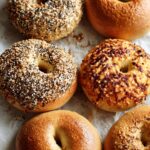
Homemade Sourdough Bagels Recipe
- Prep Time: 1 hour
- Cook Time: 20 minutes
- Total Time: 9 hours 20 minutes
- Yield: 8 bagels
- Category: Bread
- Method: Baking
- Cuisine: American
- Diet: Vegetarian
Description
This homemade sourdough bagels recipe yields soft, chewy, and flavorful bagels with a delightful tang from the sourdough starter. Featuring a natural fermentation process, the bagels are kneaded by hand, boiled in a honey water bath for a perfect crust, and baked to golden perfection. Customize your bagels with a variety of toppings or enjoy them plain with butter for a truly satisfying treat.
Ingredients
Dough Ingredients
- 150 grams active sourdough starter (3/4 cup)
- 250 grams warm water (1 cup + 1 tablespoon)
- 500 grams bread flour (3 1/2 cups)
- 40 grams sugar (3 tablespoons)
- 12 grams salt (2 teaspoons)
Boil Bath
- 20 grams honey
Instructions
- Make the Dough: In a straight-edged bowl, combine the active sourdough starter, warm water, and sugar. Mix by hand or with a Danish dough whisk until the mixture looks like a milky liquid. Then add the bread flour and salt, mixing until fully incorporated. Knead the stiff dough by hand for 5-6 minutes, using a folding and pushing technique to develop gluten. Cover with plastic and let it rest for 60 minutes.
- Stretch and Fold: After resting, perform a gentle stretch, fold, and push routine with the heel of your hand for about 30 seconds to smooth the dough. Cover again and place in a warm spot to rise.
- Bulk Rise: Allow the dough to double in size, which typically takes 8-12 hours at 69°F. The timing will vary depending on kitchen temperature.
- Shape the Bagels: Turn the risen dough onto a clean workspace without flour. Stretch it into a large rectangle about 1/2 inch thick. Cut into 8 equal triangular pieces, then shape each piece into a smooth ball by pulling corners toward the center and rolling. Poke a hole in the center of each ball with your thumb and stretch to about 2 inches diameter.
- Second Rise: Place shaped bagels on a parchment-lined baking sheet, cover with plastic to prevent drying, and let them rest for 20-60 minutes until puffed. Alternatively, refrigerate covered for up to 24 hours; if refrigerated, allow extra time for the second rise after removing from the fridge.
- Preheat and Prepare Boil Bath: Preheat the oven to 425°F. Bring about 10 cups of water to a boil in a large pot, adding and whisking in 20 grams of honey to the water.
- Boil the Bagels: Carefully drop 2-3 bagels into the boiling honey water. Boil each side for 30 seconds, then remove using a slotted spoon and place on a cooling rack set on a kitchen towel.
- Add Toppings: If desired, dip the tops of boiled bagels into your choice of toppings such as everything bagel seasoning, sesame seeds, or cheese. Place the topped bagels on a parchment-lined baking sheet. For cheese toppings, dip the bottom side as well for a crunchy bite.
- Bake: Bake the bagels for 20-25 minutes at 425°F until golden brown and internal temperature reaches 200-210°F. Remove from oven and cool on a wire rack.
- Serve: Enjoy the bagels warm, ideally sliced with butter for a chewy, buttery experience.
Notes
- Follow the simple baking schedule: 8pm – make dough and rest 1 hour; 9pm – stretch and fold and bulk rise overnight; 7am – shape and second rise; 8am – boil and bake.
- Topping suggestions include everything bagel seasoning, poppy seeds, sesame seeds, garlic flakes, onion flakes, Asiago cheese, and cinnamon crunch.
- Store leftover bagels in a plastic bag at room temperature for 2-3 days or freeze whole or sliced for up to 3 months.
- To reheat, microwave briefly or thaw and toast.
- Alternative uses: bagel chips, egg sandwiches, burger buns, or mini bagel pizzas (‘bagel bites’).
Nutrition
- Serving Size: 1 bagel (approximately 115g)
- Calories: 280
- Sugar: 5g
- Sodium: 380mg
- Fat: 1.5g
- Saturated Fat: 0.3g
- Unsaturated Fat: 1.2g
- Trans Fat: 0g
- Carbohydrates: 58g
- Fiber: 2g
- Protein: 10g
- Cholesterol: 0mg