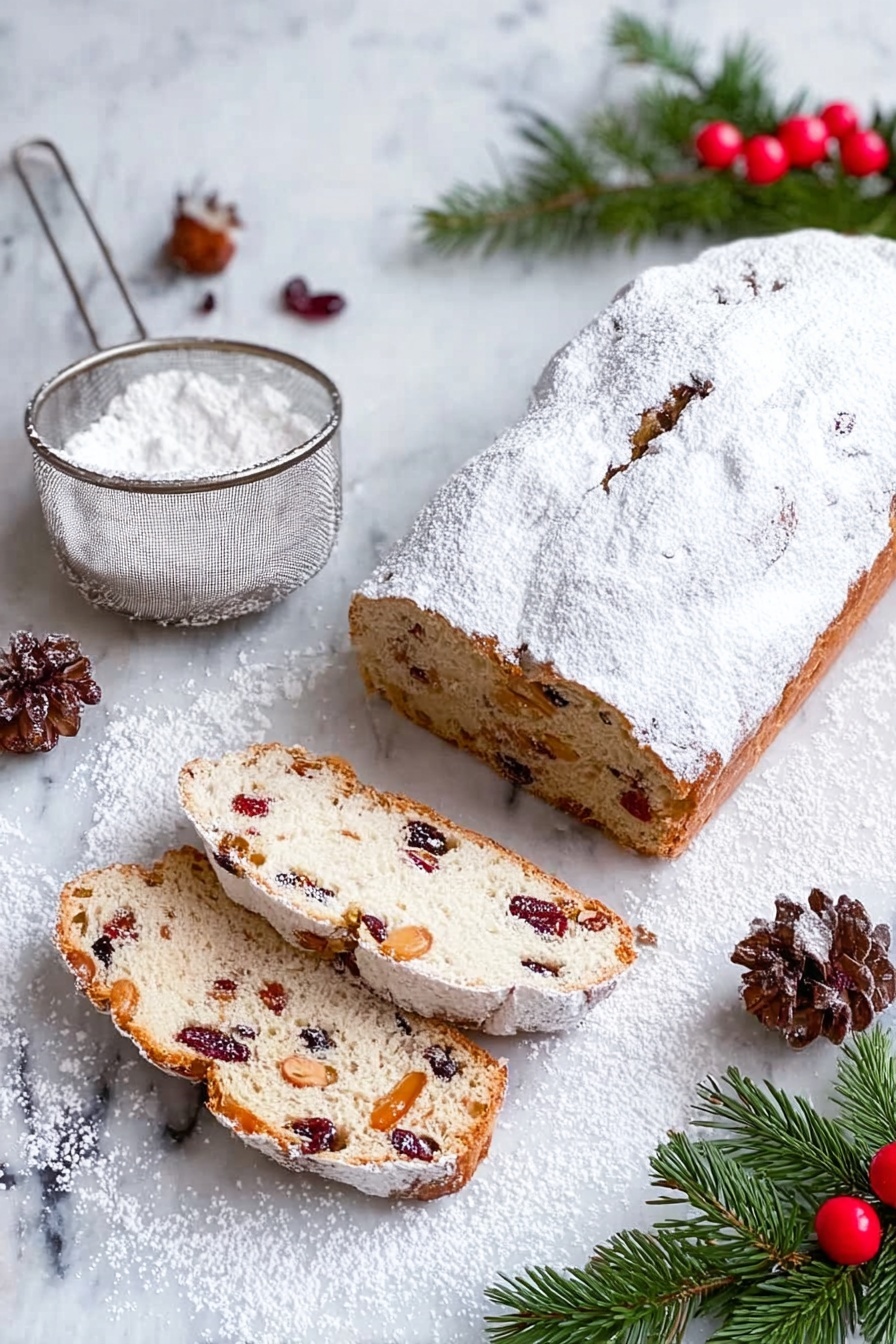
If you’re looking for a truly special treat to bring warm holiday vibes to your kitchen, this Traditional Christmas Stollen Bread Recipe is going to become your new favorite. I absolutely love how this bread comes together with its tender crumb, festive dried fruits, and that lovely layer of buttery, spiced sugar on top. It’s a classic that never fails to impress, whether you’re gifting it or slicing it up alongside your Christmas morning coffee. Stick around and I’ll share everything you need to nail this recipe with confidence and joy!
Why You’ll Love This Recipe
- Rich Flavor Harmony: The blend of soaked dried fruits, fragrant spices, and buttery dough brings traditional Christmas flavors alive in every bite.
- Hands-On and Rewarding: Working with the dough and mixing in the fruits is truly therapeutic—and the result is so worth the effort.
- Perfect for Festive Gifting: Wrapped up nicely, these Stollen loaves make gorgeous, thoughtful homemade presents.
- Make-Ahead Friendly: This bread actually improves in flavor when rested for a few days, giving you flexibility during busy holidays.

Ingredients You’ll Need
This recipe is all about layering flavors—from the warming spices to the medley of soaked dried fruits and the rich buttery dough. Choosing good-quality ingredients really shines through here, especially your dried fruits and butter.
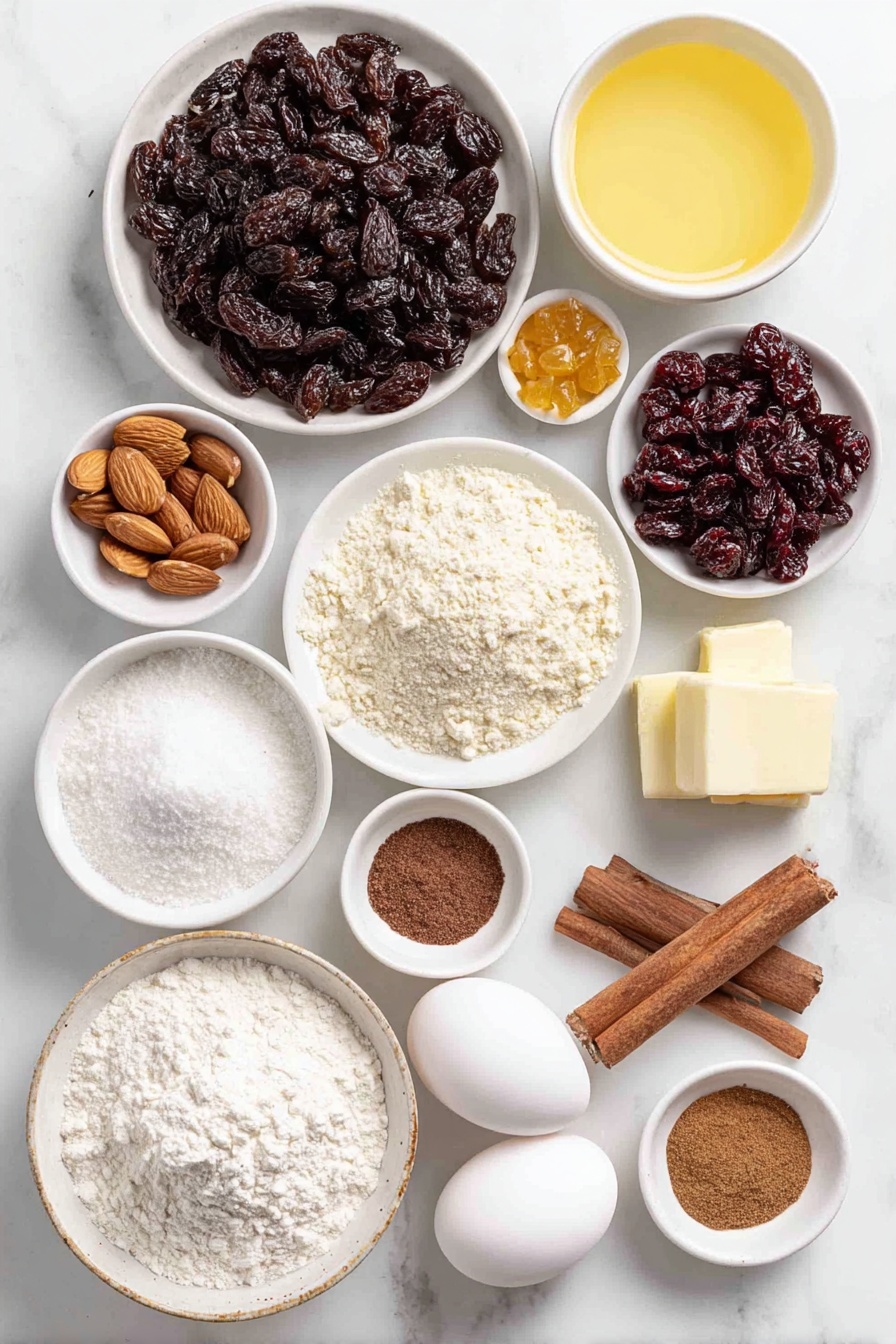
- Dark Raisins: Adds deep sweetness and chewiness; soak well to plump them up nicely.
- Golden Raisins: For a lighter, fruity contrast that balances the darker raisins.
- Currants: Small but potent bursts of tangy flavor.
- Diced Candied Orange Peel (or Apricots): Provides that classic citrus brightness essential to Stollen.
- Dried Cranberries or Cherries: Tartness that cuts through the sweetness, making the bread less one-note.
- Whole Almonds: Adds crunch and a subtle nuttiness; you can toast them lightly if you want extra depth.
- Dark Rum or Brandy: The secret to soaking fruit and infusing that unmistakable holiday warmth.
- Orange Juice: Complements the rum with fresh citrus acidity.
- All-Purpose Flour: Forms the sturdy but tender bread base; measured carefully for best results.
- Instant Dry Yeast: Easy and reliable for a nice rise without fuss.
- Warm Milk: Activates the yeast and nourishes the dough.
- Salt: Balances sweetness and boosts flavor.
- Cardamom, Cloves, Nutmeg: Traditional Christmas spices; freshly ground if possible for the best aroma.
- Lemon Zest: Brightens and freshens the spice mix.
- Unsalted Butter: Softened to room temperature for creaminess in dough and melted for brushing.
- Egg Yolks: Enrich the dough giving it that beautiful golden color and tender crumb.
- Sugar: For sweetness in the dough and spiced sugar topping.
- Oil: To coat the dough for rising and prevent sticking.
- Powdered Sugar: For that snowy finish—don’t skip it; it’s part of the magic.
Variations
I love that this Traditional Christmas Stollen Bread Recipe is flexible—you can tweak it to fit your flavor preferences or dietary needs without losing that classic vibe. Personalize it to your heart’s content!
- Fruit Swap: I’ve swapped in dried apricots or figs when I wanted a different texture and it still turned out beautifully.
- Nut Variations: Try using hazelnuts or walnuts instead of almonds for a different crunch profile.
- Dairy-Free Version: Replace milk with almond or oat milk and use a dairy-free butter alternative; just watch the dough texture closely as it might need a bit more flour.
- Spice Level: Feel free to tweak the spices—adding a pinch of cinnamon or even a little ground star anise can make it more festive.
How to Make Traditional Christmas Stollen Bread Recipe
Step 1: Soak the Fruits for Maximum Juiciness
Begin by tossing all your dried fruits into a bowl with the dark rum and orange juice. I like to soak mine overnight—it really plumps up the fruit, making every bite juicy and flavorful. If you’re short on time, warming the mixture in the microwave for a couple of minutes and then letting it sit for an hour is a good shortcut. Just remember the almonds don’t get soaked—they stay crunchy and delicious this way.
Step 2: Crafting the Sponge to Boost Flavor
This part sets the foundation of your dough’s rise and flavor. Mix 2 cups of flour with yeast in your mixer bowl, then slowly add the warm milk while mixing at medium-high speed for about a minute. Cover the bowl and let it rest somewhere warm for an hour. This sponge is fantastic because it lets the yeast get active without being overwhelmed by too much flour or butter early on.
Step 3: Mixing in the Spices and Butter
Once your sponge is fluffy and bubbly, it’s time to add the flavor magic: lemon zest, softened butter, egg yolks, and sugar. Add the butter slowly, a couple of tablespoons at a time, and make sure it’s fully incorporated before the next addition. You’ll notice the dough turning thick and luscious—a sign that you’re on the right path.
Step 4: Kneading in Flour and Spices
Now gradually add your seasoned flour mixture to the dough while mixing with a paddle attachment until stiff and shaggy—for a dough that’s starting to come into shape. Then switch to the dough hook to knead gently but thoroughly for about 10-12 minutes total. The key is to get a soft dough that pulls away from the bowl sides but doesn’t feel sticky—this tells you the gluten has developed just right.
Step 5: First Rise—Patience is Your Friend
Lightly oil a large bowl and place your dough ball inside, turning to coat it with oil. I usually cover it loosely with plastic wrap and set the bowl in a warm spot. In my experience, this can take anywhere from 1.5 to 2.5 hours depending on your kitchen temperature, but you’ll know it’s ready when doubled in size and bubbly on top.
Step 6: Incorporating the Fruit and Almonds
Drain your soaked fruit well—excess liquid can make the dough soggy. Then add the nuts and fruit to the dough bowl and knead by hand until evenly distributed. I find a floured work surface great for the final kneading, and a quick 10-minute dough rest afterward really helps relax it for shaping.
Step 7: Shaping Your Stollen
Divide the dough into four equal parts, then shape each into an oval. Folding one third over and creating that classic ridge takes a bit of practice but don’t stress if it isn’t perfect—the powdered sugar dusting will hide a lot! Keep some space between loaves on your parchment-lined trays, then cover loosely and let rise another hour.
Step 8: Baking to Golden Perfection
Preheat your oven and bake the loaves for about 40 to 45 minutes total. Flip trays and rotate halfway for even browning. If they brown too fast, tent with foil—you want that beautiful golden crust without burning. When done, use a thermometer to check for 190°F internally—that’s your done signal! Let them cool slightly on racks placed over parchment to catch drips.
Step 9: Butter and Sugar Glaze Finish
Brush on melted butter while the loaves are still warm, then sprinkle generously with spiced sugar. This glaze adds a soft, flavorful crust that’s absolutely irresistible. After cooling completely, wrap the loaves tightly in plastic and foil, then store in a cool dry place for at least three days before slicing. This rest time lets all those beautiful holiday flavors meld together.
Pro Tips for Making Traditional Christmas Stollen Bread Recipe
- Fruit Soaking Matters: Soak your dried fruits overnight for the most luscious texture; it’s worth the wait and brings out fantastic flavors.
- Dough Temperature: Keep your kitchen warm and dough covered so your stollen rises beautifully—cold drafts can slow yeast activity.
- Don’t Skip the Rest: Let the shaped dough rest after kneading fruit—this makes shaping much easier and less frustrating.
- Powdered Sugar Finish: Dust generously just before serving to get that signature snowy look—trust me, it’s non-negotiable.
How to Serve Traditional Christmas Stollen Bread Recipe
Garnishes
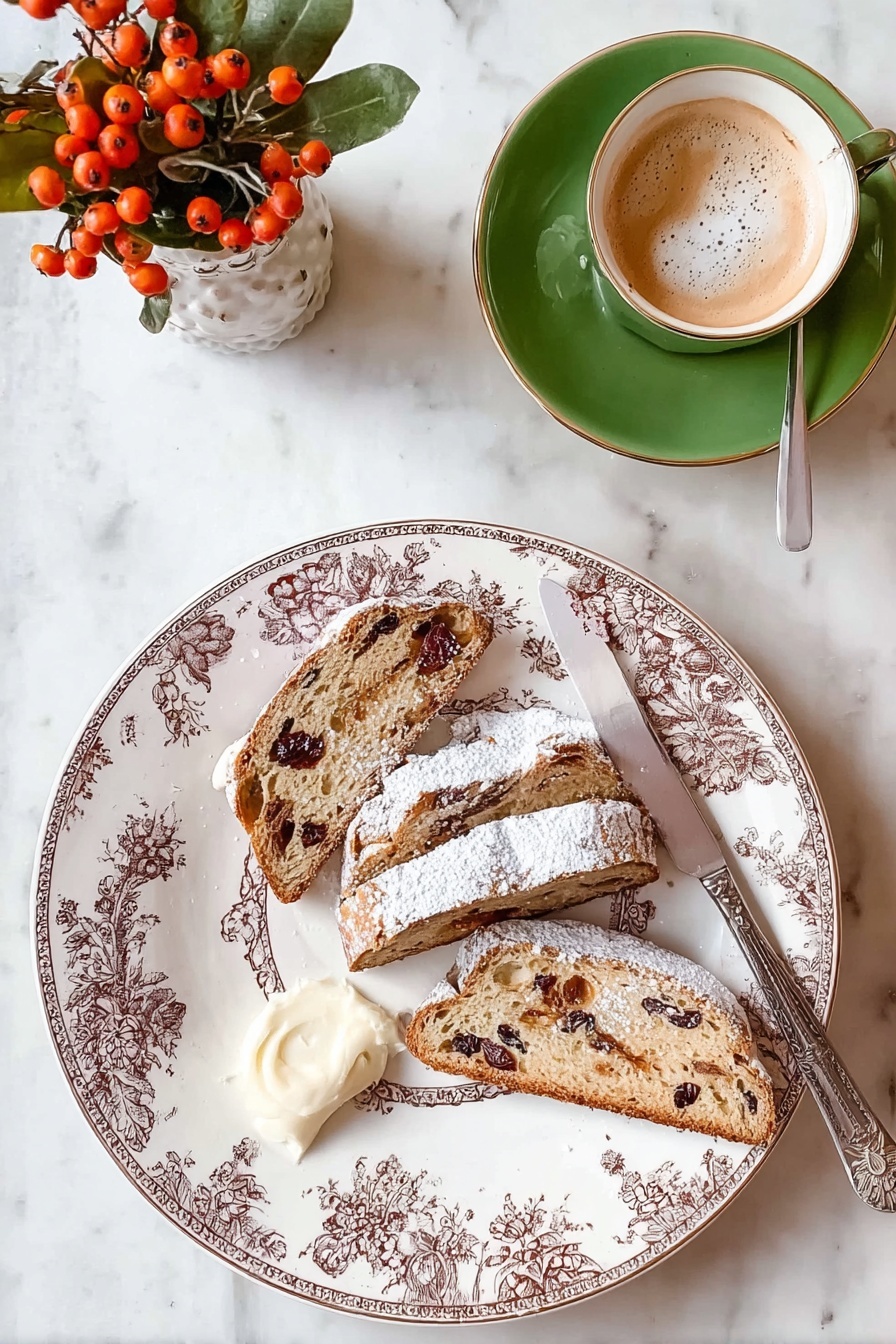
I often dust my slices with a little extra powdered sugar right before serving, just to revive that fresh-baked look. Some people enjoy a thin spread of butter, honey, or even a smear of fruit jam to complement the spices and fruits. I keep it simple—sometimes a handful of toasted almonds or an orange slice on the side adds a nice touch of color and crunch.
Side Dishes
This stollen pairs beautifully with a hot cup of spiced tea, mulled wine, or a creamy latte. For holiday brunch, I like serving it alongside soft scrambled eggs or a sharp cheese board to contrast the sweetness. It’s also lovely with a fruit compote or fresh berries to keep things bright.
Creative Ways to Present
For holiday parties, placing the loaves on a decorative wooden board with sprigs of rosemary and cinnamon sticks turns them into a centerpiece. I’ve also wrapped individual slices in parchment tied with twine for gift giving or festive snack packs. You can even hollow out a larger loaf to turn it into an edible basket for clove-studded oranges or candy canes—it’s a fun twist and always a conversation starter!
Make Ahead and Storage
Storing Leftovers
After your stollen has cooled completely, I wrap mine tightly in plastic wrap and then foil to keep it fresh. It stores wonderfully at room temperature in a cool, dry spot—not the fridge! I keep mine in a bread box or a sealed container to maintain moisture without drying out.
Freezing
I’ve had great luck freezing whole or sliced stollen wrapped well in plastic and foil. Just make sure to thaw it slowly overnight in the fridge before serving. The texture stays moist and delicious, and freezing lets you make ahead the whole batch without worry.
Reheating
To revive leftover slices, I like a quick warm-up in a toaster oven or under the broiler for a few minutes, just until the edges crisp slightly and the internal crumb warms. Avoid microwaving, which can make the bread rubbery. This way, you get a lovely fresh-baked feel every time.
FAQs
-
Can I make Traditional Christmas Stollen Bread Recipe without alcohol?
Absolutely! You can substitute the dark rum or brandy with extra orange juice or even a strong brewed tea like black tea or spiced chai. The soaking still plumps the fruit and imparts flavor, and you’ll still have that wonderful texture.
-
How long can I store stollen before eating?
Traditional Christmas Stollen Bread actually improves after resting for 3 to 5 days. You can safely store it at room temperature (wrapped well) for up to two weeks, which makes it perfect for making ahead of holiday gatherings.
-
What’s the best way to tell if my stollen is done baking?
Look for a golden brown crust and an internal temperature of 190°F (about 88°C) when checked with a kitchen thermometer. Also, it should sound hollow when tapped on the bottom.
-
Can I prepare the dough by hand instead of a stand mixer?
Definitely! Kneading by hand will take more time and elbow grease, about 12-15 minutes, but the dough should be soft and elastic. Using a mixer is just a time-saver, not a necessity.
Final Thoughts
This Traditional Christmas Stollen Bread Recipe truly holds a special place in my holiday traditions. The aroma filling the kitchen, the joyful anticipation of that first slice dusted with snow-white sugar—there’s nothing quite like it. If you want to impress your friends, family, or just treat yourself to an authentic festive classic, this stollen is the way to go. Give it a try, and I promise you’ll be thrilled with the result as much as I am each year!
Print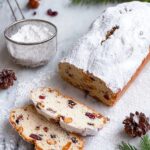
Traditional Christmas Stollen Bread Recipe
- Prep Time: 30 minutes
- Cook Time: 45 minutes
- Total Time: 5 hours 15 minutes
- Yield: 4 loaves (approximately 24 slices total)
- Category: Bread
- Method: Baking
- Cuisine: German
Description
This traditional Christmas Stollen recipe features a rich, yeast-leavened bread studded with a medley of dried fruits, almonds, and aromatic spices. Soaked in rum and orange juice, the fruits impart a moist, fruity sweetness, while the dough is enriched with butter and egg yolks, creating a tender crumb. Baked to a golden brown and finished with a spiced sugar glaze and a dusting of powdered sugar, these festive loaves are perfect for holiday celebrations and improve in flavor when allowed to rest for several days.
Ingredients
Dried Fruit Mixture
- 1/3 cup dark raisins
- 1/3 cup golden raisins
- 1/2 cup currants
- 1/2 cup diced candied orange peel, or apricots cut into 1/4-inch dice
- 2/3 cup dried cranberries, cherries or other tart dried fruit cut into 1/4-inch pieces
- 1 cup whole almonds, with or without skins
- 1/2 cup dark rum or brandy
- 1/4 cup orange juice
Dough
- 5 cups (600g) all-purpose flour, divided, plus more as needed
- 2 1/4 teaspoons (1 packet) instant dry yeast
- 1 1/4 cups warm milk
- 1 teaspoon salt
- 1/2 teaspoon ground cardamom
- 1/4 teaspoon ground cloves
- 1/4 teaspoon ground nutmeg
- Finely grated zest of 1 lemon
- 1 cup (2 sticks) unsalted butter, softened at room temperature
- 2 large egg yolks, at room temperature
- 1/3 cup sugar
- 2 teaspoons oil, to coat the bowl
Spiced Sugar Glaze
- 1/2 cup sugar
- 1 teaspoon ginger
- 1/8 teaspoon nutmeg
- 6 tablespoons unsalted butter, melted
- About 1 cup powdered sugar (for serving)
Instructions
- Soak the Fruit: In a medium bowl, combine all dried fruits with dark rum or brandy and orange juice. Let soak overnight for maximum flavor. Alternatively, microwave for 2 minutes uncovered until warm, cover, and soak for at least 1 hour. Note that almonds are not soaked.
- Prepare the Sponge: In the stand mixer bowl with paddle attachment, mix 2 cups of flour and the yeast on low speed just to combine. Add warm milk and increase speed to medium-high. Beat for 1 minute to form sponge. Cover with plastic wrap and place in a warm spot to rise for 1 hour until bubbly and risen.
- Mix Dry Ingredients: In a large bowl, whisk together the remaining 3 cups of flour, salt, cardamom, cloves, and nutmeg. Set aside.
- Combine Dough Ingredients: Return sponge to the mixer bowl, fit with paddle attachment, and mix on medium speed. Add lemon zest and blend. Add softened butter 2 tablespoons at a time, mixing to incorporate thoroughly. Add egg yolks and beat until mixed. Blend in sugar.
- Add Flour and Knead Dough: Switch to low speed and gradually add 2 1/2 cups of the flour-spice mixture. Once the dough becomes stiff, switch to dough hook attachment and knead on low for 4–6 minutes. Then add remaining flour mixture 2 tablespoons at a time, scraping down sides as needed. Continue kneading for 4–6 more minutes until dough is soft and pulls away from the bowl sides.
- First Rise: Coat a large bowl with vegetable oil. Shape dough into a ball and place in bowl, turning to coat all sides with oil. Cover with plastic wrap and let rise in a warm place for 1 1/2 hours or until doubled. In cooler kitchens, this may take longer.
- Incorporate Fruit and Almonds: Drain soaked fruits. Using one hand to steady the dough bowl, knead in the fruit and almonds with the other hand until mostly incorporated. Transfer dough to a floured surface and gently knead for 1–2 minutes until fruit and nuts are evenly distributed. Let dough rest for 10 minutes to relax.
- Shape the Loaves: Line two baking sheets with parchment paper. Divide dough into four equal pieces. Flatten one piece into an 8-inch round. Fold one-third of the dough toward the center, then fold the opposite flap over it, leaving about a 1-inch gap to form a ridge. Cup hands and taper the ends to form an oval-shaped loaf with a ridge on top. Repeat with remaining pieces. Place loaves spaced 3 inches apart on prepared sheets.
- Second Rise: Cover loaves loosely with plastic wrap and let rise in a warm place about 1 hour until doubled in size.
- Preheat the Oven: About 20 minutes before loaves finish their second rise, preheat oven to 350°F (175°C).
- Bake the Loaves: Place loaves in oven and bake for 25 minutes. Swap top and bottom baking sheets and rotate each pan 180 degrees. Bake an additional 15–20 minutes until golden brown and an internal temperature of 190°F (88°C) is reached. If browning too fast, loosely cover with foil.
- Prepare Spiced Sugar Glaze: In a small bowl, mix sugar with ginger and nutmeg.
- Glaze and Cool: Remove loaves from oven and cool 10 minutes on pans. Brush warm loaves generously with melted butter, then sprinkle the spiced sugar evenly over them. Let cool completely on wire racks set over baking sheets.
- Storage and Serving: Once fully cooled, wrap loaves tightly in plastic wrap then foil. Store in a cool, dry place (not in refrigerator) for at least 3 days to allow flavors to mature and for up to 2 weeks. Before serving, dust heavily with powdered sugar through a strainer. Serve plain or with butter, honey, or jam as desired.
Notes
- Soaking the dried fruit overnight develops deeper flavors but microwave soaking is a faster alternative.
- Using instant dry yeast simplifies the sponge preparation, but if using active dry yeast, allow it to bloom in warm milk before mixing with flour.
- The dough should be soft but not sticky; add flour sparingly to achieve the right consistency.
- Final proofing time may vary depending on kitchen temperature; look for dough doubling in size.
- The loaves improve with resting for several days before slicing and serving to allow the flavors to meld.
- Keep stored loaves outside the fridge to maintain texture—refrigeration can dry the bread.
- Use a thermometer to ensure perfect doneness; the ideal internal temperature is 190°F (88°C).
- Feel free to substitute brandy for rum and candied orange peel for dried apricots depending on preference.
Nutrition
- Serving Size: 1 slice (about 70g)
- Calories: 280 kcal
- Sugar: 12 g
- Sodium: 210 mg
- Fat: 11 g
- Saturated Fat: 6 g
- Unsaturated Fat: 4 g
- Trans Fat: 0 g
- Carbohydrates: 38 g
- Fiber: 2 g
- Protein: 5 g
- Cholesterol: 55 mg